
Community voices are shaping Methuen’s literacy roadmap, and the first round of survey results is now in.
What we heard from Methuen
In Fall 2025, the Methuen Literacy Partnership asked our community a simple but powerful question:
“What helps – and what gets in the way – of children learning to read well in Methuen?”
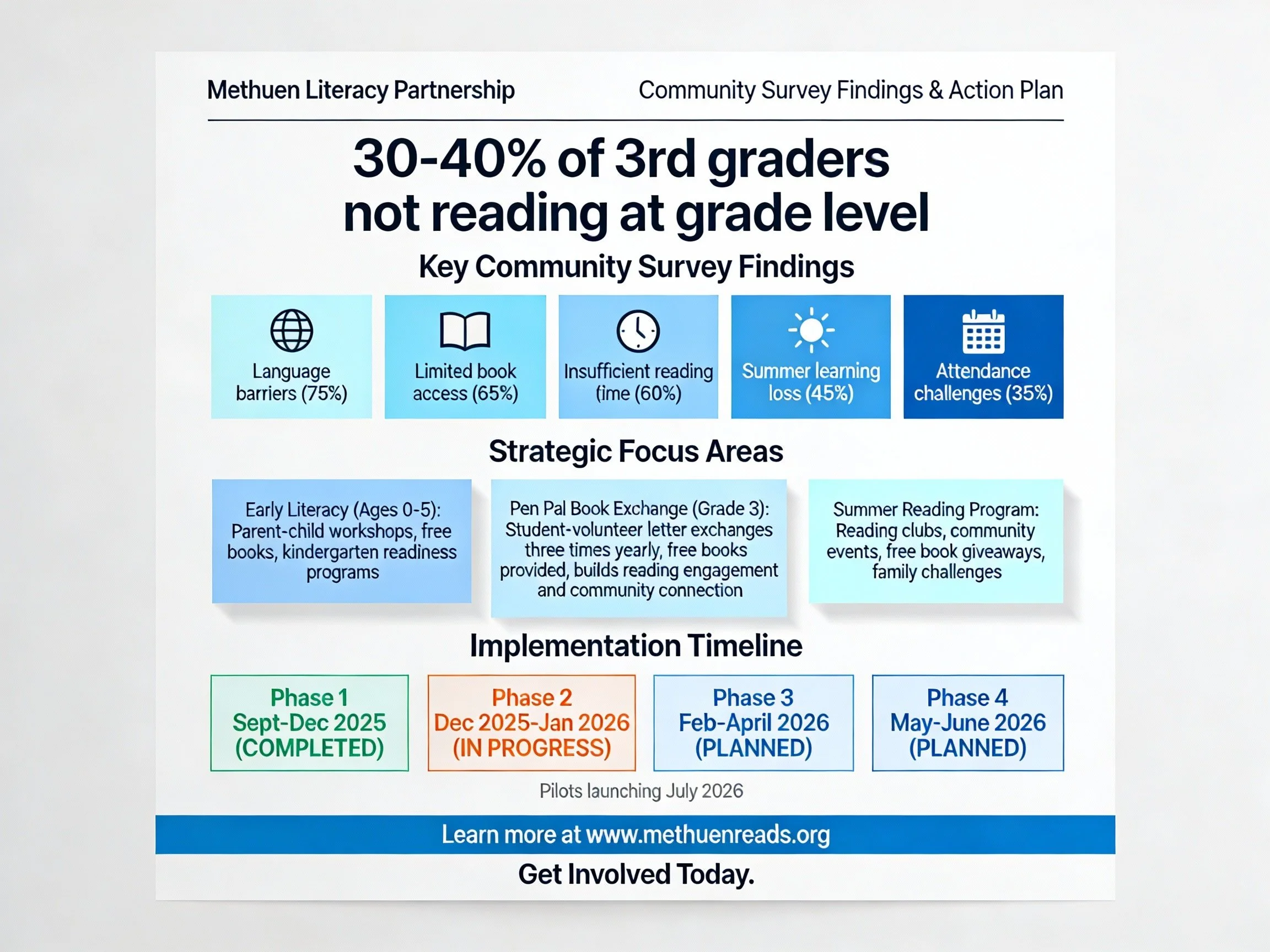
Thank you to all the parents, caregivers, educators, students, nonprofits, and community members who shared how reading is going at home, in schools, and across the city. This feedback confirmed an urgent challenge: an estimated 30–40% of Methuen 3rd graders are not yet reading at grade level, and many families want more support with reading at home.
Community members were clear: this is urgent, but it is fixable if Methuen works together.
What’s Getting in the Way?
Key Challenges Families Named
1
When asked what makes it hard for children to read on grade level, several themes came up again and again:
Language barriers (about 75% of responses)
Multilingual families want to support reading at home but are often still learning English themselves. They need strategies and resources in both English and their home languages.Limited access to books (about 65%)
Many homes simply don’t have enough age-appropriate books. Getting to the library can be hard due to work schedules, transportation, or childcare.Not enough intensive reading time (about 60%)
Families and educators see a need for more targeted, small-group reading instruction, especially for students who are behind.Summer learning loss (about 45%)
Students lose reading skills over the summer when they do not have structured learning opportunities. Families often cannot afford camps or paid programs.Attendance and access challenges (about 35%)
Work schedules, transportation, and childcare can make it difficult for families to get children to programs—even when they want to participate.
2
What Families Want:
Solutions in Their Own Words
The survey was not just about challenges; it was about what would actually help. Families consistently asked for:
Programs held at schools
Services located where children already are (their own schools) to remove transportation barriers.Free tutoring and enrichment
Cost is a major barrier. Families want no-cost reading supports, especially for students who are struggling.Summer reading opportunities
Structured, fun summer programs to prevent learning loss and keep kids reading all summer long.Parent education and support
Practical workshops and tools to help parents and caregivers support reading at home—in multiple languages.Multilingual resources
Materials, communication, and programs in Spanish and English so families feel fully included.Flexible schedules
Program times that work for working families (after work, evenings, weekends).
Regular progress updates
Clear, ongoing communication about how children are doing and what support is available if they are behind.
3
Community Strengths:
What Methuen Already Has
The survey also highlighted Methuen’s assets and readiness to act:
Schools and educators committed to improving literacy
Nevins Library as a trusted, central community resource
Healthcare providers interested in promoting early literacy
Nonprofits, faith-based organizations, and community groups ready to partner
Local businesses looking for meaningful ways to invest in Methuen’s children
Families deeply committed to their children’s success
How These Findings Are Shaping the Methuen Literacy Partnership
4
Using the survey data and community conversations, the Methuen Literacy Partnership has identified three strategic focus areas to guide the next phase of work.
Early Literacy (Ages 0–5): Parent–child workshops, free books for young children, and kindergarten readiness supports so every child starts school on strong footing.
Community Engagement: A new program where students exchange letters with volunteers three times per year, receive free books, and build both reading engagement and community connection.
Summer Reading & Engagement: Reading clubs, community events, free book giveaways, and family challenges to keep kids reading and learning all summer long.
These strategic priorities align with national research showing that students who read proficiently by the end of third grade are four times more likely to graduate high school than peers who do not.
Each priority area will have a working group of volunteers to identify program ideas, resources, and assist with being literacy champions in our city
Even though the survey has closed, your voice is still essential to this work.
Join a working group, an upcoming event, community conversation, or pilot program.
Volunteer as a pen pal, reading buddy, or event helper.
Spread the word about Methuen Literacy Partnership with your networks.
Contact us through the form on this site if you have ideas, questions, or want to partner.
Together, Methuen can ensure every child is reading confidently by the end of third grade—and that starts with continuing to listen, learn, and act as a community.